🔥⚔️ The hangar had been silent for less than thirty seconds, but to the soldiers standing inside it, those seconds seemed to stretch into an entire hour.
By Ty
8 min read

🔒 The hangar went silent. Water dripped from Specialist Saret’s chin onto the concrete. Colonel Drake stood in front of the formation, dress blues perfect, voice cutting through the heat. “Maybe now you’ll remember your place, Specialist.” She didn’t wipe her face. She didn’t look down.
“Well?” he snapped. “Are you finished, sir?” A few soldiers in the ranks shifted. No one spoke. Drake stepped closer. “You think rank protects you from consequences?” “No, sir.” “Good. Then walk.” She didn’t move. Instead she reached into her wet pocket, pulled out her phone, and dialed.
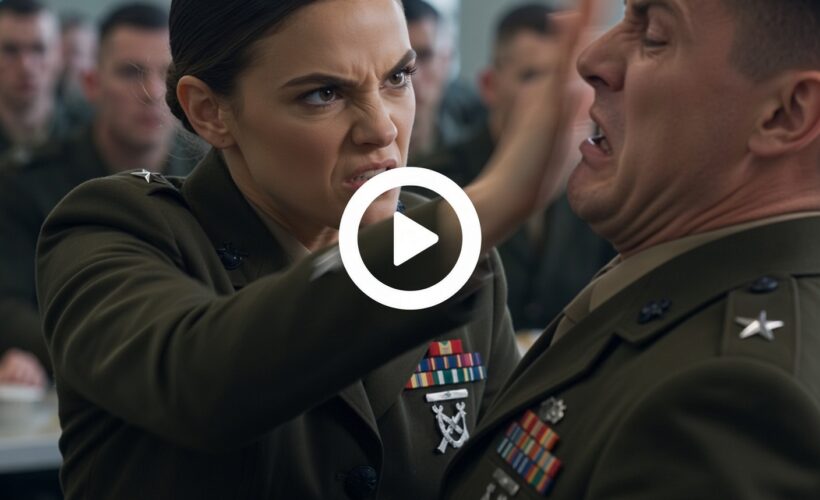
Drake laughed. “Hah. Calling your lawyer?” Saret put the phone to her ear, water still running down her neck. “Sir,” she said quietly. “It happened again.” Pause. “Put Drake on.” The colonel’s smirk stayed in place as he snatched the phone. “This is Colonel Drake.
Who exactly am I speaking to?” The voice on the other end was calm. Almost bored. “Colonel, you have five minutes.” Drake’s face changed. “I see.” He glanced at the soaked specialist standing in front of the entire company. The bucket. The puddle.
The American-flag cooler still sitting on the floor like a prop. “Five minutes for what, sir?” The voice did not raise. “To explain why you just poured water on the officer who—” The line cut for half a second. Saret’s eyes lifted.
For the first time since the water hit her, the corner of her mouth moved. Not a smile of fear. Something else. Drake stared at the phone like it had turned into a weapon.
Behind him, one hundred soldiers waited in perfect formation, dripping hangar lights reflecting off wet concrete, no one daring to breathe. Five minutes. And whatever name the voice had been about to say… was not supposed to be standing in formation as a specialist.
👇 The hum of the heavy ventilation units inside Hangar 4 did little to cut through the oppressive midsummer humidity settled over Fort Benning. Outside, the midday heat rose in shimmering waves off the tarmac, but inside, the atmosphere had plunged into a deep freeze.
One hundred soldiers from the 4th Battalion stood at rigid attention, their uniforms dark with sweat, their eyes locked straight ahead as the echo of dripping water resonated off the corrugated steel walls.
At the center of the formation stood Colonel Richard Drake, his dress blues immaculate despite the sweltering temperature, his chest adorned with rows of ribbons that spoke of a long, distinguished military career built on strict discipline and unwavering protocol.
In front of him, soaked from head to toe, stood Specialist Elena Saret. The incident that had just transpired was unlike anything the unit had witnessed before. Minutes earlier, Colonel Drake had strode into the hangar, clearly furious over
a perceived breach of protocol regarding maintenance schedules on the battalion's transport vehicles. In an act designed to humiliate and assert dominance over what he perceived to be a insubordinate lower-enlisted soldier, Drake had picked up a heavy blue
American-flag cooler filled with ice water and dumped it directly over Saret’s head. The ice rattled across the concrete floor, leaving a widening puddle beneath her boots. Yet, throughout the ordeal, Specialist Saret had not flinched, nor had she
made any attempt to wipe the stream of water cascading down her face and neck. Witnesses later described the moment as surreal. In the military hierarchy, the distance between a Colonel commanding a battalion and a Specialist working in
maintenance is vast, a chasm defined by years of service, rank, and institutional authority. Traditionally, an enlisted soldier faced with such an outburst would have no recourse but to endure the treatment, submit a formal grievance through official channels
weeks later, or face court-martial for insubordination if they dared to talk back. But Specialist Saret did not fit the standard mold, a fact that Colonel Drake was about to discover in the most public and catastrophic manner possible.
When Saret pulled her phone from her waterproof pocket and placed the call, the initial reaction from the commanding officer was sheer disbelief mixed with arrogance. Drake’s assumption that she was calling a JAG lawyer or a family member
was consistent with his belief that he held absolute authority within the walls of Hangar 4. However, the tenor of the situation shifted instantly when the voice on the other end commanded Drake to take the receiver.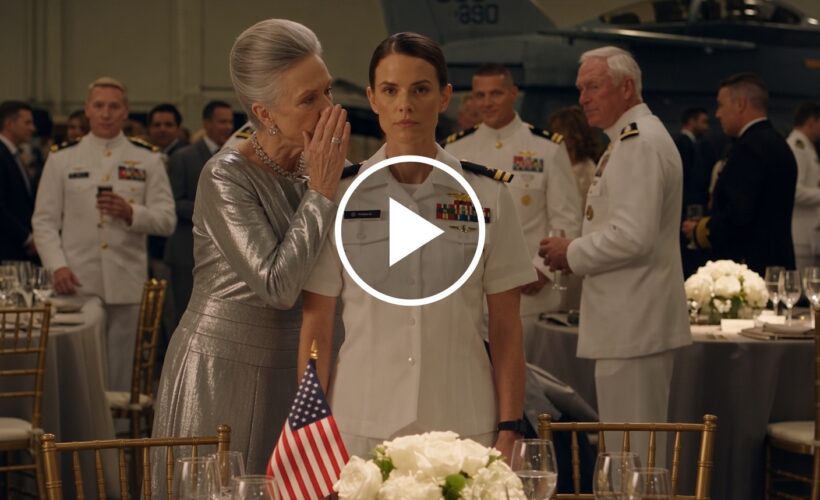
Those standing close enough to the Colonel reported seeing the color drain from his face within seconds of putting the phone to his ear. The calm, authoritative tone on the line belonged to General Marcus Vance, Chief of Staff
of the Armed Forces, a man who answered only to the Secretary of Defense and the Commander-in-Chief. What Colonel Drake did not know—and what had been deliberately kept classified under a special joint operations directive—was that Specialist Elena Saret was not an ordinary junior enlisted soldier.
Her real identity was Major Elena Vance, a highly decorated intelligence officer and covert inspector embedded directly into field units to evaluate operational readiness, command climate, and leadership integrity across various installations.
The "Specialist Saret" persona was part of a broader Department of Defense initiative aimed at uncovering systemic abuse of power, corruption, and morale-destroying practices that traditional military inspections often failed to detect due to advance warnings and staged performances by local commanders.
For three months, Major Vance had lived as Specialist Saret, performing routine maintenance tasks, eating in the mess halls, and experiencing firsthand the daily realities faced by lower-enlisted personnel. During her time with the 4th Battalion, she had documented
numerous instances of administrative misconduct, falsified readiness reports, and personal harassment orchestrated by Colonel Drake and his inner circle. The bucket of ice water poured over her head was merely the final, undeniable proof of a toxic leadership environment
that had plagued the unit for over a year, driving attrition rates up and operational readiness down. The conversation between Colonel Drake and General Vance lasted less than three minutes, though to the onlookers in the hangar, it felt like an eternity.
The Chief of Staff did not shout or make threats; instead, he laid out the immediate consequences with absolute clarity. Drake was ordered to relinquish his command effective immediately, surrender his sidearm to the battalion executive officer, and remain
in his quarters pending a formal Article 32 hearing and a comprehensive investigation by the DoD Inspector General. The phone call concluded with a directive that stunned Drake to his core: he was to apologize directly to Major Vance
in front of the entire formation before being escorted off the premises. As Drake lowered the phone, his hands trembled slightly, the crisp authority he had projected moments before completely shattered. The silence in Hangar 4 was absolute; not
a single soldier moved, though the tension had shifted entirely from fear of the commander to anticipation of his downfall. Drake turned to face the soaked woman standing before him. The realization of what he had done—not just to
a fellow soldier, but to a senior officer conducting an official audit—seemed to hit him all at once. The career he had spent thirty years building, marked by ambition and rigid enforcement of authority, had unraveled in a matter of seconds over a display of petty tyranny.
"Major," Drake began, his voice barely above a whisper, lacking any of the thunder that had echoed through the hangar moments prior. "I... I was unaware of your true assignment. I offer my sincere apologies for my actions today."
Major Vance did not smile, nor did she celebrate the dramatic turn of events. Her expression remained stoic, professional, and composed, reflecting the discipline that had earned her a place in the elite covert inspection program.
"Apology noted, Colonel," she replied quietly, her voice carrying clearly across the silent ranks. "However, your actions today were not unacceptable because of my rank. They were unacceptable because of how you treat the men and women under your command.
Rank exists to direct structure and responsibility, not to shield a commander from basic human decency or accountability." Following the encounter in the hangar, the fallout was swift and widespread. Military Police arrived at Hangar 4 within fifteen minutes
to escort Drake to his headquarters, where his clearance was suspended and his access to battalion records revoked. The executive officer assumed temporary command, immediately issuing orders to review all pending disciplinary actions and administrative penalties initiated by Drake during his tenure.
Meanwhile, Major Vance met briefly with the company officers and senior non-commissioned officers to explain the nature of her presence and to reassure the troops that a full review of the battalion's climate was underway.
The story of the "Wet Specialist" quickly spread through military circles, becoming an instant legend among lower-enlisted service members and a sobering cautionary tale for commanders across all branches of the armed forces.
It highlighted a growing movement within the Department of Defense to modernize command accountability and ensure that leadership at all levels is held to the highest ethical standards. The practice of using undercover inspectors, while controversial in some traditional
military quarters, proved undeniably effective in exposing abuses that would otherwise remain hidden behind walls of fear and institutional compliance. Months later, the formal proceedings against former Colonel Drake concluded with his forced retirement at a reduced rank, alongside
administrative reprimands for several subordinate officers who had facilitated his abusive practices. The official report published by the Inspector General cited the incident in Hangar 4 as a prime example of command failure driven by hubris and a fundamental misunderstanding of authority.
The report emphasized that true leadership relies on respect, competence, and integrity, rather than intimidation or the arbitrary exercise of power over subordinates. As for Major Vance, she was awarded the Distinguished Service Medal for her role in the
operation, which ultimately led to policy reforms regarding commander evaluations and soldier welfare tracking across the military. Shortly after the investigation concluded, she returned to her primary role at the Pentagon, continuing her work to ensure that the armed
forces remain an institution built on honor, mutual respect, and accountability at every level of command. The puddle on the concrete floor of Hangar 4 eventually dried, but the lesson it left behind remained etched into the culture of the battalion for years to come.
(Note: The content below is a fictional article upon request, and does not reflect real events).